
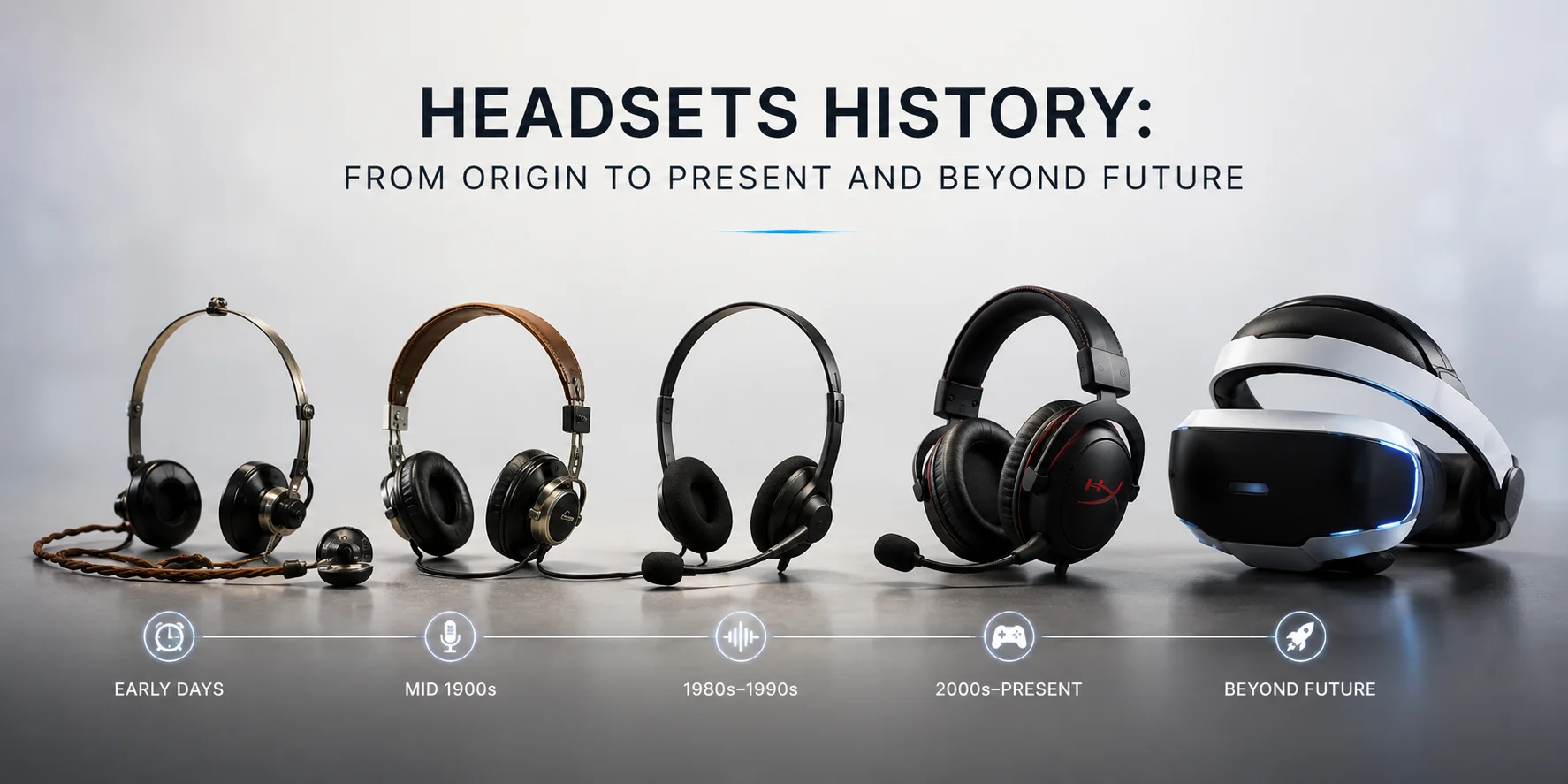
 By
By Every 8 out of 10 USA residents wear headsets, whether they are a gamer, an office professional, or a fitness enthusiast. According to a 2017 survey by Statista about headset usage, 87% of USA respondents confirmed wearing headsets for listening to music. That’s completely normal today, but it was just a concept in the past.
Have you ever thought about when the professional-grade headsets you are wearing today were invented? If not, let’s think about it today. In this article, we are going to look back at the headset history, from its idea to its implementation. Let’s bring historical events into the light so that you can understand to what extent headset technology has evolved. Let’s get started!
Origin and Background
The history of headsets dates back to the 1980s, when headphones were introduced for military purposes, not for music. There was not a single company who can be given the credit of bringing headphones to the market, streets, and home from the military bases.
Telephones were the antecedents of headphones, as they were also listening and talking devices. They also provided privacy that enabled friends and family to communicate with each other privately. Later, the telephones were improved with an earpiece that rested on their shoulders. It was challenging to handle because the earpiece weighed 10 pounds. To handle this, first, lightweight earbuds were introduced that operated on radio communication, so the operator’s hands were freed.
After these earbuds, the single-sided and stethoscoped-shaped headsets named Electroscope were introduced. These headphones operated by dialing on the switchboard that connected users to the live theatre and opera center performances all over London. This was the first invention intended for music and entertainment purposes.
The phonograph ( first loudspeaker) and the microphone were the antecedents of today’s headset. Without a microphone, the headphones were only listening devices, which were of no use, as your voice was not transmitted. The headphones depended on the microphone for transmitting voice and removing the background noise.
Headsets History Timeline
After learning about the origin and the background, you can understand that the headsets were not invented overnight. They evolved for years, and many contributors contributed to introducing the technology that we enjoy today. Let’s look back at each historical event that contributed to the development of today’s headsets:
1880s: The 10-Pound Headphones
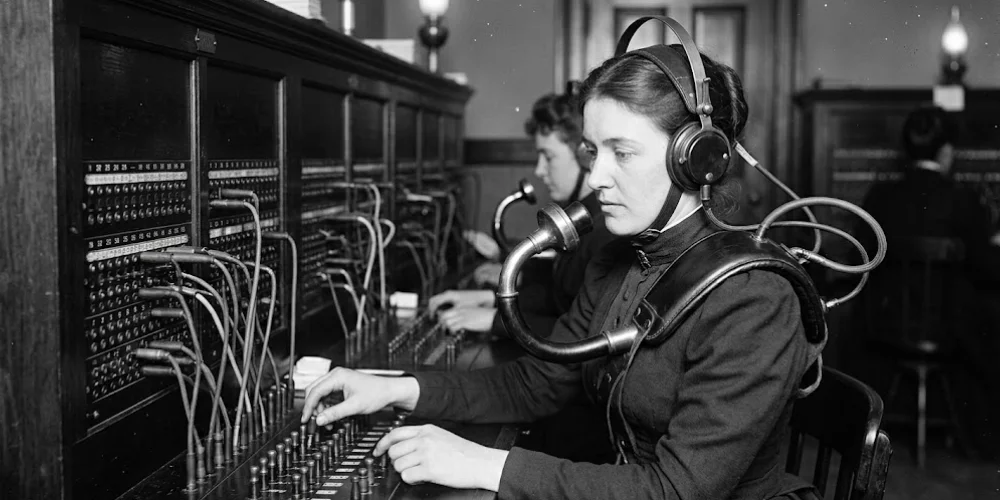
If you were present at the birth of headphones, you can’t imagine the smaller headset options that are common today. In the 1880s, Ezra Guilliland invented a headphone that weighed over 10 pounds and was connected to the switchboard operators. The prominent features of this headphone were one earpiece that was attached to a phone, while a large microphone rested on the shoulder. The telephone operators used this setup.
1890: Electrophone
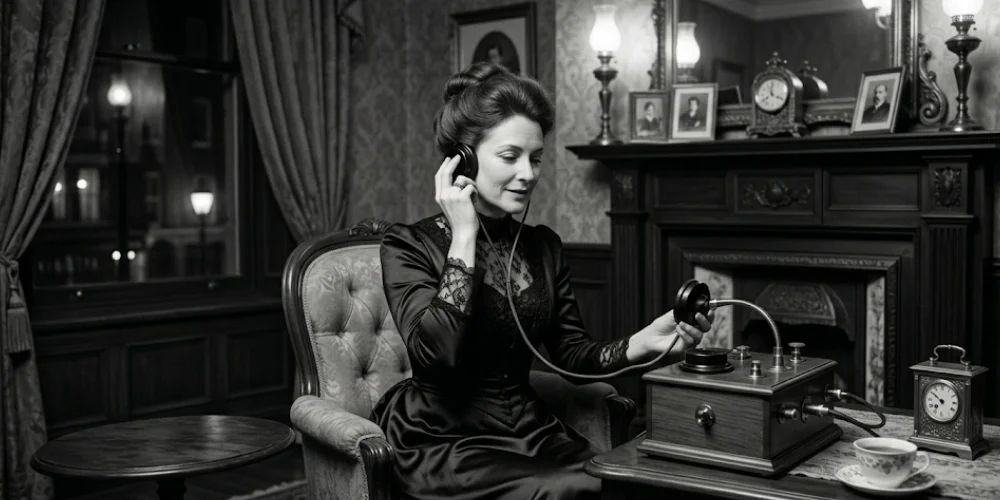
The Electrophone was invented in Britain, which allowed customers to connect to live theatre hall performances. For this, they had to dial in to the switchboard with a subscription fee of £5 a year.
1891: The First “Earbuds”

A French engineer, Ernest Mercadier, patented the bi-telephone, which can be said to be the first recorded version of in-ear headphones. These in-ear headphones were lightweight and portable, which resemble today’s IEMs we use today. The engineer recommended using a rubber cover while using these headphones. This will protect the ears from friction.
1910: The First Official Audio Headphones Adopted by the Navy
Nathaniel Baldwin was the engineer who invented the first pair of audio headphones in his kitchen in Utah. Although there have been similar ideas in the past, its invention was noticeable. His headphones featured 2 padded earcups and 2 bands across the head for a comfortable and perfect fit. His purpose was to listen to the sermons at his local Mormon temple.
The Navy found potential in his headphones and ordered 100 pieces after being impressed by the design that didn’t need an external power source. This opened a business opportunity for the Baldwins. But his financial success didn’t last because of unwise investments and imprisonment for mail fraud.
1958: Stereo Headphones and the Birth of Brands
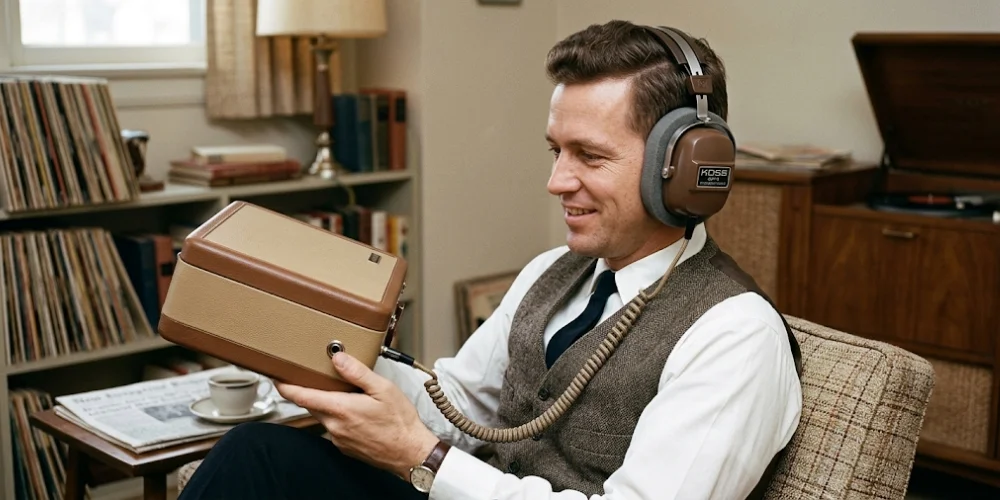
The early models were nothing more than mini speakers covered with cardboard and sofa foam. In 1958, John Koss created his first stereo headphones, which were named Koss SP-3, and he wrote a book at that time. Instead of focusing on audio devices for military and communication, his focus was on music and entertainment. So, he shifted the use of headphones from military and communication to music.
For listening to music privately, he introduced the Koss Model 390. This system featured a record player, a headphone jack, and a speaker. For this model, his first stereo headphones, Koss SP-3, were compatible and featured plastic earcups, a 3-inch speaker, and foam earpads.
1958: Birth of Brands
The invention of John Koss opened the commercial market for headphones. It formed the foundation for today’s famous brands Philips and Sennheiser as they followed the technology introduced by him.
1960s: The First Wireless Headphones
Decades before Bluetooth technology existed, i.e., in the 1960s and 1970s, wireless headphones were present. They operated on the built-in AM/FM antennas and 2-inch speakers in each padded earcup. So they were named “radio headphones.” These headsets enabled users to bring the radio and listen to music or audio wherever they went.
These wireless headphones also helped hearing-impaired people in such a way that they can hear their radios anywhere they want. These headphones can be said to be the early models of radio headphones available in today’s market.
1966: Beatlephones
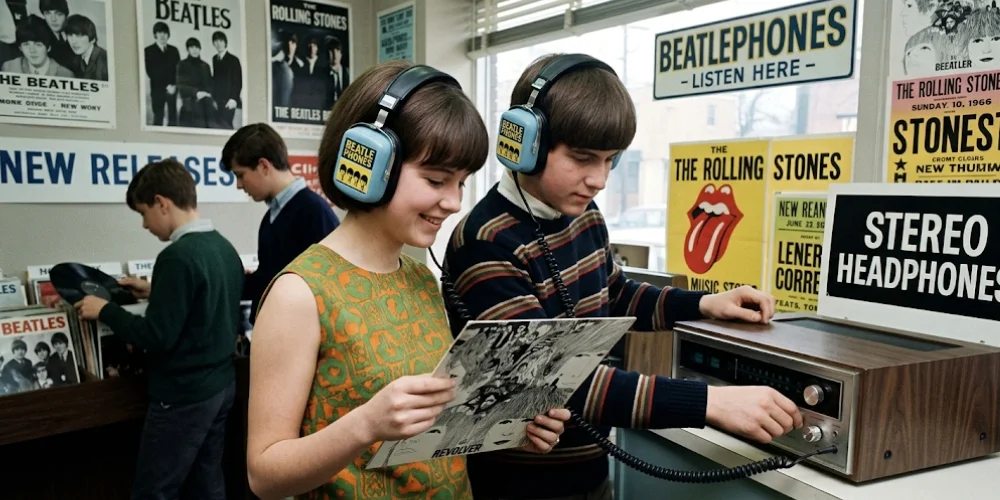
John Koss and the Beatles' partnership resulted in the creation of the first branded stereo headphones in 1966. They were named Beatlephones and were designed to target the teen audience and pop culture. This was a huge success as the market extended for the teen audience as well, and supported pop culture.
1969: The First Open-Back Headphones
In 1969, the first open-back headphones, Sennheiser’s HD 414, were invented. The open design from the back of the earcups helped users to enjoy wider sound. In addition, they were more lightweight and breathable as compared to headphones with closed earcup backs. Audio quality and comfort were maximized as compared to previous models.
1979: The Walkman
In the year 1979, the trend of using listening equipment either at home or in a fixed place shifted to using portable headsets. The Walkman was presented as an audio solution for listening to music personally and privately. At that time, headphones designed for music didn’t satisfy the customer's needs.
This led to the demand for headphones from third parties. Sony’s first portable headphone, the Walkman, sold over 400 million units while the cassette tapes outsold vinyl. Sony introduced the habit of listening to music, which was the turning point for the headphones industry. Other competitors followed this technological trend.
1989: Bose’s Noise-Cancelling Headphones

The demand for private listening led to the development of noise-cancelling headphones in 1989. These headphones were equipped with a small microphone that captured and silenced the outside noise. It generated an equal but opposite sound wave to do so.
The noise-cancelling technology proved useful for the pilots, combat vehicle crewmen, and even for personal and official use.
1990s: Growth of Smaller Technologies
The people at that time demanded portable headphones with the rise in portable devices such as cassette tapes, CDs, and mini discs. In the 1990s, Sony's “Street Style” was presented in the market, and other portable types of headsets were introduced. The other types include in-ear, earbuds, neckband headphones, and more.
1994: Bone Conduction Headphones

Bone conduction technology was always needed, and this was known for decades. In 1994, Werner Bottsch patented the first bone conduction headphones. These headphones transmitted sound directly through the bones of the skull instead of the eardrum. They enabled the user to be aware of the outside environment while wearing the headset.
Like every industry, this technology was used by the military, which was later publicly available to athletes and everyday consumers. Aftershokz was a well-known company for bone conduction headphones for consumers and athletes.
iPod / MP3 Players - 2001

Apple stepped into the market with its iPods when there were MP3 players everywhere. They took portable digital music to the mainstream with clever marketing and commercials. Apple introduced a white, sleek, and modern aesthetic. Soon, there were white Apple wired earbuds everywhere. Just like the hype of the Walkman in 1979, the iPod and MP3 players increased the demand for lightweight and cheap earbuds.
2004: Bluetooth Revolution

Bluetooth technology has been under development since 1999 to replace the wired headphones concept. The Bluetooth headphones were finally introduced in 2004, offering an alternative to wired headsets everywhere.
2008: Beats by Dre for Fashion
With the growing interest in fashion, the headset brands converted headsets for utility into a fashion statement. After the branded headphones, the Beatles phone in the 1960s, Dr Dre released his Monster Beats.
The success of Monster Beats by Dr. Dre has inspired other brands such as Beats, UrbanEars, Skullcandy, and more. They also transformed their utility headsets into a fashion statement. That’s why today headsets are available in different functions and preferences.
2013: Social Good
LSTN was the first headphone company that, in partnership with Starkey Hearing Foundation, helped 300,000 people hear for the first time. For this, they used sales profit.
2015: The First Truly Wireless Earbuds
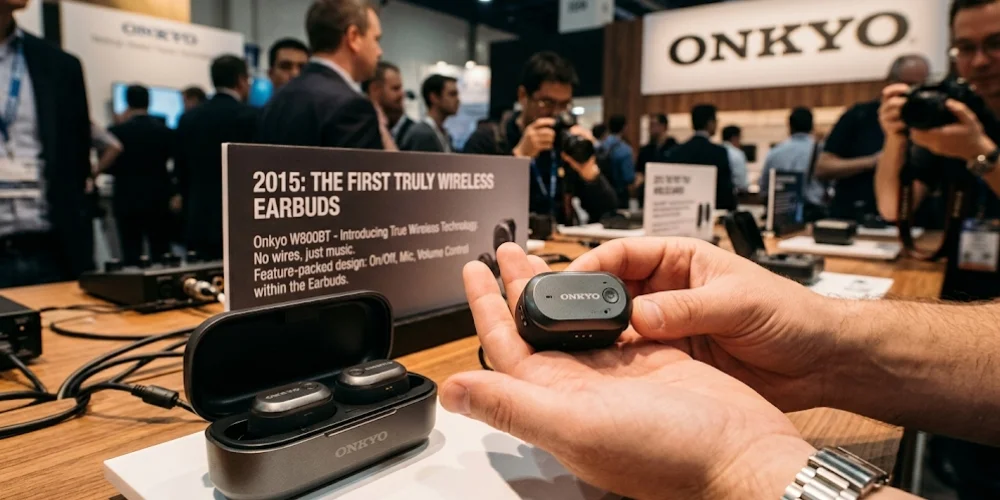
Before 2015, wireless headphones and earbuds were present, while Bluetooth technology was also available. But these headphones were not entirely wireless, as they didn’t need a wired audio source, but a wire connecting each earpiece was needed.
In 2015, Onkyo, a Japanese manufacturer of audio equipment, surprised everyone with the first truly wireless headphones, the Onkyo W800BT. Everything was in the earbuds, such as the on/off switch, mic, and volume control.
Onkyo opened the way for other competitors to bring truly wireless technology and make it even better.
2017: AirPods
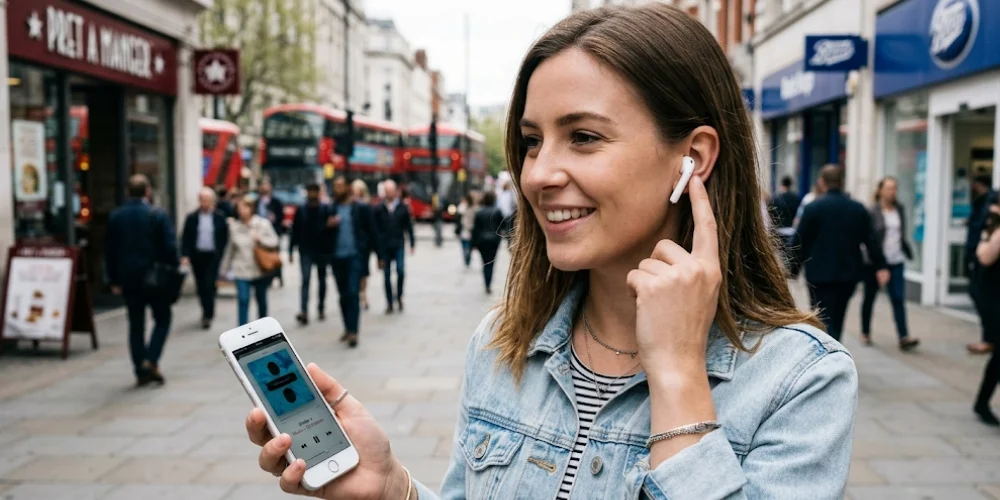
In 2017, Apple changed the game of the truly wireless headset introduced by Onkyo with its AirPods. Apple presented the extremely lightweight headset that weighed only 4g each and introduced the advanced features. The features include double-tap to pause audio and automatic pause on removal from the ear. They were one of the fastest-selling Apple accessories, with over 60 million units.
The unique selling point of these AirPods was their unique and chic style. Some competitors stepped into the market with the same strategy.
2020 and Beyond: The Future of Headphones

After 2020, the current technologies have improved, such as Bluetooth technology is shifted to Bluetooth 5.3 / 5.4 technology. AI has been integrated to support various functions in the headsets. The top manufacturer brands like Plantronics, Jabra, Sennheiser, Logitech, and EPOS have integrated AI to improve noise-cancelling technologies.
Core Advancements in Technology
The Bluetooth LE Audio and the LC3 code, and other Bluetooth Codecs, have been introduced to improve audio quality. Companies are focusing on replacing traditional paper or plastic diaphragms with silicon-based drivers. Spatial audio is now a standard in today’s headsets.
Heart rate monitoring, hearing protection, and AI assistants are some advanced features you can find in today’s headsets.
AI Integration and Smart Personalization
AI is integrated into different functions of the headsets to improve their performance. Headsets like the Jabra Evolve3 series have AI-enhanced and adaptive noise cancellation technology, intelligent transparency modes, smart sensors, and controls.
Jabra Evolve2 and Jabra Evolve3 series contain AI-enhanced features, specifically Jabra Evolve3 75 and 85.
Industry & Design Trends
The 55% of the headset market is now flooded with True Wireless Stereo (TWS) headsets, while Qi2 wireless charging is also normalized. In 2024, the focus is shifted to using eco-friendly materials to reduce as much environmental pollution as possible. Recycled plastics and only 10% of biodegradable components are being used in the newly launched models. Logitech H390 is one example.
For gaming and remote work, low-latency wireless headsets with high-quality beamforming microphones are in demand for an immersive experience. Similarly, the craze for VR headsets is continuously growing, which requires advanced features and surround sound capabilities.
The headset industry has not stopped there, as the future is unknown. There will be more advancements that will enhance your work and music listening experience. Let’s expect greater things in the future.
Conclusion
The headsets have now become hearing aids that we carry anywhere, whether we are working in the office or at home. Whether you are busy exercising or listening to music while jogging, they serve as your portable travel companion. From their origin to the present, from headphones to headsets, they have evolved to a great extent that could not be imagined.
Today, headsets are advanced enough to support our daily work operations, keep us focused, and improve our productivity. This journey has not ended here. The headset manufacturers are busy introducing new technologies, such as Jabra has introduced Jabra Evolve3 85 and Jabra Evolve3 75 in 2026. The future is unknown, and more great things can be expected.
No comments yet. Be the first to comment!
Leave a ReplyYour email address will not be published. Required fields are marked *